Coming soon

The core of this upcoming eBook (perhaps a print release as well) will the painful but oddly cathartic essay I wrote and posted freely online during the late 1990s spanning the 26 months of my late daughter's excruciating cancer ordeal in southern California. I reproduce it in its entirety below following these prefatory remarks. I will finish out this specific essay amid the completion of this book. The numerous yet-to-be-recounted details still seem like last week.
Surrounding this core will be my reflections upon the more than twenty years during which I have been involved with our health care system.
I have seen our health care system "up close and personal" for quite some time now from multiple perspectives: as an analytical and technical professional serving three tenures with HealthInsight, the Nevada-Utah Medicare QIO (Quality Improvement Organization); as a graduate student (my first grad school semester paper comprised an analytical deconstruction [pdf] of the 1994 JAMA "Single Payer" proposal); as a next-of-kin caregiver of fifteen years' duration at the bedsides of my late daughter and my now-late parents (both of whom languished in long-term care for a number of years until passing on several years ago); and, now, at the age of 67, a Medicare beneficiary beset by a number of the usual chronic conditions that come with the increasing length of my life and my bloodline genetics..
This latter facet led to a bit of humor recently. Upon taking my retirement back in April, some song lyrics just summarily popped into my head one morning out of nowhere (in my "prior life" I was a working songwriter and guitarist). Twenty minutes later the first draft of a song emerged.
 |
| Click the image to enlarge if it's difficult to read |
Specifically, the "bridge" section just before the final chorus.
I have blogged rather exhaustively on heath policy and health information technology topics over the years, and such work will also inform the substance of my One in Three story. We are today at the threshold of a significant -- and controversial -- shift in the administration and delivery of U.S. health care. It's not all that clear how things will turn out, but we can safely assume that health policy will likely remain quite loudly contentious for years to come, given the trillion of dollars at stake and the increasing health care needs of a huge greying population resident in a troubled economy.
I have the greatest respect for the women and men who choose the delivery of health care as their calling, and will always be their champion. What follows, written and posted episodically from 1996 through 1998, should give you some inkling as to just why.
- Bobby Gladd
________________________
One in Three

On April 19th, 1996 my daughter "Sissy" (above, circa early 1996) was unceremoniously and without warning ripped from her daily routine by cancer. It was 9:55 on a Friday morning when I got the call that would instantly and irreversibly alter the course of our lives.
I'd just finished sending off some e-mail correspondence and was preparing to head down to the Las Vegas YMCA for the mid-day basketball run I so thoroughly enjoyed. Fridays were a particular treat. Once a week the staff lowered the rims at the ends of the gym, raised the center partition normally separating the sideways short courts, and let us run regulation 94-feet full-court; the Real Deal -- you can run your mouth, but can you run the floor? The weekly spectacle of our hoop-astute but ill-conditioned resident Air Jordan Walter Mittys gagging after three trips court-length was a continuing source of delight to this below-the-rim nebbish encumbered with mere backup-squad skills yet blessed with hard-won lungs and legs of steel. C'mon; one more to eleven, homie. Whatsa matter? You got time; check ball.
I never made it. My next stop, a half-dozen frantic and nerve-wracking hours later, would be that of the surgical service of Los Angeles County Hospital.
Baby-boomers in Boomtown
Life had been good of late. I'd recently left my job as a statistician and computer network administrator with the Nevada/Utah Medicare Peer Review agency and had returned to graduate studies full-time at UNLV's Institute for Ethics & Policy Studies. Serving as chairman of the American Society for Quality in Las Vegas and on the board of the new Southern Nevada Quality Council were at once worthy and enjoyable pro bono public service ventures. My wife was thriving in her role as the quality assurance program manager for the environmental cleanup program at the Nevada Test Site. Daily basketball had provided me with a twenty pound weight loss and a resting pulse in the low 50's. Periodic forays into the awesome wilds of southern Utah were favorite activities: skiing in winter, camping and day-tripping in summer. And Vegas: the concerts, the shows, the restaurants, the conveniences of a booming 24-hour town...
I'd just finished sending off some e-mail correspondence and was preparing to head down to the Las Vegas YMCA for the mid-day basketball run I so thoroughly enjoyed. Fridays were a particular treat. Once a week the staff lowered the rims at the ends of the gym, raised the center partition normally separating the sideways short courts, and let us run regulation 94-feet full-court; the Real Deal -- you can run your mouth, but can you run the floor? The weekly spectacle of our hoop-astute but ill-conditioned resident Air Jordan Walter Mittys gagging after three trips court-length was a continuing source of delight to this below-the-rim nebbish encumbered with mere backup-squad skills yet blessed with hard-won lungs and legs of steel. C'mon; one more to eleven, homie. Whatsa matter? You got time; check ball.
I never made it. My next stop, a half-dozen frantic and nerve-wracking hours later, would be that of the surgical service of Los Angeles County Hospital.
Baby-boomers in Boomtown
Life had been good of late. I'd recently left my job as a statistician and computer network administrator with the Nevada/Utah Medicare Peer Review agency and had returned to graduate studies full-time at UNLV's Institute for Ethics & Policy Studies. Serving as chairman of the American Society for Quality in Las Vegas and on the board of the new Southern Nevada Quality Council were at once worthy and enjoyable pro bono public service ventures. My wife was thriving in her role as the quality assurance program manager for the environmental cleanup program at the Nevada Test Site. Daily basketball had provided me with a twenty pound weight loss and a resting pulse in the low 50's. Periodic forays into the awesome wilds of southern Utah were favorite activities: skiing in winter, camping and day-tripping in summer. And Vegas: the concerts, the shows, the restaurants, the conveniences of a booming 24-hour town...
Things were going along so very well.
One in three
The statistics (of which I had been blissfully unaware despite having recently worked as a Medicare analyst) reveal that one in three of us will at some point come to deal with cancer, either as a patient, or as an immediate family member of one. Cancer is a disease of such subliminal dread as to induce an ongoing denial while we are healthy and not having direct contact with a cancer sufferer. We'd just as soon not think about it, thank you.
One in three
The statistics (of which I had been blissfully unaware despite having recently worked as a Medicare analyst) reveal that one in three of us will at some point come to deal with cancer, either as a patient, or as an immediate family member of one. Cancer is a disease of such subliminal dread as to induce an ongoing denial while we are healthy and not having direct contact with a cancer sufferer. We'd just as soon not think about it, thank you.
But when cancer does appear, the impact is frequently devastating for all involved. For too many, a diagnosis of cancer comes late in the progression of the disease, leaving the afflicted with limited and problematic therapeutic options and their loved ones with a feeling of being endlessly "behind the curve" also awash in often conflicting information and emotions, groping desperately for the means of survival and healing. Such has indeed been our case for the past year and a half. I have come to learn more than I ever wanted to know about this insidious disease that so frustrates the finest minds in medical science. It is a frustration that fuels a thriving and fervent -- but often naive and irresponsible --"alternative healing" industry whose wildly varying methods and claims must also be individually evaluated in the quest for the tools of a loved one's survival and healing.
The following is recounted to illustrate some of what to expect should you become one of the "one in three."
Sissy Sue
Since high school, my daughter had wanted so intensely to be an actress. Drawn to the glamor of Hollywood, she struggled for years at the periphery of "The Industry" (as she called it), her quest made all the more difficult by her refusal to accept offers involving even "softcore" nudity. Her tenuous existence of spotty sportswear catalog modeling assignments, trade shows, minor syndication TV work, and the occasional music video extra was typical of what I once characterized as "the innumerable, chronically impecunious actress/model wannabees that overpopulate southern California."
Since high school, my daughter had wanted so intensely to be an actress. Drawn to the glamor of Hollywood, she struggled for years at the periphery of "The Industry" (as she called it), her quest made all the more difficult by her refusal to accept offers involving even "softcore" nudity. Her tenuous existence of spotty sportswear catalog modeling assignments, trade shows, minor syndication TV work, and the occasional music video extra was typical of what I once characterized as "the innumerable, chronically impecunious actress/model wannabees that overpopulate southern California."
Things were finally looking up a bit, however. A few career puzzle pieces were falling into place, helpful contacts established, the doors opening just a crack. A layout for Shape Magazine was in the works, and Sissy was training feverishly at Gold's Gym in Venice Beach to be at her physical peak.
And indeed she was. She reveled in her ability to effect the dramatic entrance, with heads turning in concert upon her arrival. The spectacle of what I called "The Sissy Sue Mafia," a dazzling cohort of shapely, dressed-to-kill "babes" sweeping into a party, nightclub, or restaurant, was a sure-fire attention-getter. I would muse 'enjoy it while it lasts.'
Ruminating, of course, on the implications of aging.
Her devotion to her image had deep and painful roots, beginning with her rejection by her mother, who handed me custody of Sissy and her younger sister Danielle when they were 6 and 4 respectively, and who would subsequently ignore her for years at a time. In the fall of 1977 a watershed calamity crashed upon us as Sissy-- then nine-- was horribly burned in a gasoline fire accident. She endured two and a half months of hellish hospitalization at the University of Tennessee Medical Center in Knoxville, eventually undergoing numerous skin graft operations. Still thereafter noticeably scarred, she would subsequently have to bear cruel taunts such as "crispy critter" and "French fry" from her more ignorant and insensitive schoolmates. Her adolescence would not prove to be much fun.
Sissy would next encounter the health care system at the age of sixteen in the wake of a fall from a third-story apartment window, a surprise descent culminating in two broken wrists, two broken ankles, and four broken teeth. She'd been at a raucous party of dubious propriety and had reflexively exited what she'd assumed to be a street-level window when the police arrived in response to a noise complaint.
Splat. Ah, the Joys of Parenthood.
One inexplicable medical mystery surfaced during her treatment for the fall; a blood test came back positive for hepatitis. We were perplexed; she was (and remained) asymptomatic. She vehemently denied having had any involvement with IV dope-- among the doctor's most plausible speculations, given the inventory of dissolute extracurricular pursuits she had admitted to.
It would be eleven years before the bleak import of that blood test would arise to shred our lives.
The State Street exit
One inexplicable medical mystery surfaced during her treatment for the fall; a blood test came back positive for hepatitis. We were perplexed; she was (and remained) asymptomatic. She vehemently denied having had any involvement with IV dope-- among the doctor's most plausible speculations, given the inventory of dissolute extracurricular pursuits she had admitted to.
It would be eleven years before the bleak import of that blood test would arise to shred our lives.
The State Street exit
"LAC," Los Angeles County Hospital/USC Medical Center is a 70-year old earthquake-scarred concrete bunker located in a gritty area just east of the shiny, elegant office towers of downtown. Reeking of urine deposited in the stairwells and elsewhere by impatient visitors and the homeless who inhabit the shrubbery surrounding the four-feet thick walls, it resounds with a cacophony of the myriad tongues of the multicultural quilt of southern California. Polyglot physicians of Oriental, European, and Hindu extraction, of necessity, speak fluent Spanish; glazed-looking patients in flimsy hospital gowns, tethered to IV's hung from mobile stands, panhandle in the hallways for spare change or cigarettes; sullenly menacing, tattooed prisoners in orange jumpsuits and heavy shackles shuffle in and out of service elevators aside heavily armed police escorts. By day a crush of humanity crowds the halls. By night security is everywhere visible and vigilant.
Last year the Los Angeles Times reported there to be an estimated 4.4 million "medically indigent" residents in the L.A. basin, a figure that includes welfare clients and the uninsured "working poor." For many of them, LAC/USC is a familiar-- if less than pleasant-- place, a sprawling, frayed complex where cutting-edge clinical education, expertise, and heroism coexist with intractable socioeconomic and bureaucratic chaos.
Add one previously carefree and clueless young blonde to the 4.4 million aggregation on April 19th, 1996. Welcome to 1200 State Street.
Sissy and some friends had been out the previous evening celebrating her pending good fortune when she suddenly came down violently ill. Suspecting tainted sushi, they took her to Emergency at Cedars Sinai Medical Center in Beverly Hills, where an ultrasound image pointed toward something vastly more ominous. At around 2 a.m., having been heavily sedated, she was transported to LAC-- end of the line for the uninsured acutely ill-- where she awoke and called me in a panic that Friday morning. Unaware that she'd been moved during the night, she had to ask an aide where she was; I could hear "1200 State Street" in an odd dialect in the background.
Quite some time would pass before my next ball game.
After five harried hours across the Mojave desert on I-15, I finally found a space and parked on a distant side street-- uneasily, given the look of the neighborhood-- and hurried to the LAC main entrance. Issued the requisite daily visitor's pass, I raced up to her ward, heart pounding. She was terrified and confused-- further imaging had revealed a huge mass in her liver, approximately 9 centimeters in diameter. Dr. Sherry Wren, a senior hepatic service surgeon (now at Stanford), explained that it was probably an adenoma: a benign growth associated with long-term oral contraceptive use. The scans also indicated the presence of two growths on an ovary, one the size of a tennis ball. Dr. Wren ordered a battery of additional tests, including needle biopsies. While the situation was without doubt serious enough to warrant surgery, Dr. Wren was confident that things were manageable.
Sissy's many friends rallied to her bedside, some staying in shifts late into the night so I could return to Las Vegas on Sunday to tie up some loose ends and pack up for a likely extended stay in Los Angeles.
When I returned to the ward the following Tuesday morning, Dr. Wren was sitting on Sissy's bed, holding her hands while my daughter sobbed. Sissy looked up as I entered and began to wail loudly "Daddy! I have cancer!" I shall never forget the look of absolute horror in her eyes.
Dr. Wren explained that the biopsy had come back positive for hepatoma (liver cancer, alternatively called hepatocellular carcinoma, or HCC). The ovarian lesions, mercifully, were benign; they would have to come out, but not right away. The immediate and dire risk was potentially fatal hemorrhage from the liver tumor. Sissy would have to be moved immediately to the ICU for monitoring while awaiting an available operating room and surgical team.
Dr. Wren also informed us that Sissy was positive for hepatitis-B (HBV), that it was likely congenital-- passed on to her by her mother (my ex-wife)-- and that it had surely caused her cancer. Given the HCC latency period of 20-30 years, any other explanation-- such as picking up HBV during adolescence that could lead to cancer a mere decade hence-- was highly unlikely.
This was baffling. Wouldn't it also have been passed on to others in the family, as it had not been? No, Dr. Wren insisted, sexual and/or in-utero transmission, while frequent, would not be inevitable. Sissy, however, had to have been born with hepatitis-B. Nothing else fit.
Subsequent family blood tests would provide both relief and agonizing confirmation. Sissy's stepmother, my partner of two decades, tested negative-- as expected, given her years-long ongoing participation in thoroughly screened blood and platelet donation drives. Our son (Sissy's half-brother) also tested negative. Danielle-- Sissy's direct sibling-- on the other hand, tested positive for HBV antibody (indicating exposure to hepatitis-B), supporting Dr. Wren's assessment of congenital transmission. Finally, my assay; it would throw me into a black funk from which I have yet to recover.
While in Baltimore in early June of 1967, a year before Sissy was born, I retired one night feeling ill and awoke to acute flu-like aches and nausea accompanied by flaming orange eyeballs, yellow skin, and a rash not unlike that generated by poison ivy. Doctors at John Hopkins University Medical Center diagnosed my condition as "acute infectious hepatitis-A." Probably contracted, they mused, during my stay the prior month in Sacramento, California, where U.S. soldiers returning from Vietnam were found to be rapidly spreading the readily-transmitted disease.
I recovered quickly, and thought little more of it, except for the recurrent mild discomfort of always having to reveal my 1967 bout of hepatitis"A" during subsequent medical, dental, or insurance exams. Providers and underwriters obviously paid the matter equally little heed, for no adverse findings ever emerged. My hepatic and serological data during twenty-odd years of ensuing physicals were uniformly stellar.
"No, you had it, but got over it" my physician explained. It had indeed been hepatitis-B, not "A" that I'd experienced nearly three decades earlier. The assays weren't all that precise back then, she observed. Nowadays we can discriminate between viral strains "A" through "G."
Oh, dear God. Was it me? But...
My therapist would hence recommend that perhaps a grant of self "absolution" was in order: that who "gave" HBV to whom prior to Sissy's conception was probably unanswerable-- and was undeniably irrelevant to the task at hand. Yes, but there is somehow scant solace in such counsel.
Hepatitis and Hepatoma
Liver cancer is quite rare in the United States, although in other regions experiencing widespread and primarily intergenerational (congenital) HBV infection-- such as Asia and the Middle East-- HCC is a leading cause of death. In the U.S., primary liver cancers are typically seen in older populations with chronic drug and alcohol abuse histories that also render their livers cirrhotic and susceptible to mutagenesis. Sadly, however, this profile is changing, as the domestic prevalence of hepatitis-B and its equally dangerous and insidious viral cousin hepatitis-C grows in otherwise younger and healthier populations-- primarily through illicit IV drug use or unprotected sex.
The prognosis for HCC patients is distressingly poor, with an aggregate post-operative life expectancy of from 6 to 18 months, and a five-year survival rate of approximately 2%. Radiation is not effective, and chemotherapy only marginally more so. Hepatoma is a particularly aggressive, chemo-resistant cancer. Surgery that removes an entire primary hepatic tumor "with good margins" (i.e., a buffer of cancer-free liver tissue surrounding the lesion) before any metastasis occurs is regarded as providing the only real hope for long-term survival.
On April 24th, during six and a half hours of surgery, Dr. Wren and her colleagues gingerly removed a hepatoma tumor mass of 9 by 8.5 by 8 centimeters: the size of a grapefruit. Out with it came two-thirds of her liver. The wait in the hallway seemed an eternity. Then, suddenly, blam, the heavy and battered O.R doors sprang open, and out rolled the tangle of tubes, bandages, wires, and beeping machines that sustained and obscured my Sissy. A quick, hard left turn and, blam, the SICU doors flew back and, just as suddenly, she was gone again. After another seemingly interminable wait, I was allowed in to be with her.
You've not truly lived until you've spent a weekend in SICU (the Surgical Intensive Care Unit) at L.A. County, an experience that brings new meaning to the word"intensive." An eerie silence hovers over the gunshot, stabbing, and blunt trauma victims occupying most of the beds, the majority sustained by life-support equipment. The clamorous, anguished wailing of their kin and friends in the hallway wracks the heart and rattles the nerves.
The long haul begins
The hepatectomy was a "success," in that the primary lesion was indeed extracted intact with good margins all around: no "extrahepatic involvement." The doctors told us that her liver would likely regenerate itself to normal size and function within a few months (the liver is the only human internal organ with the capacity to reconstruct itself. One can re-grow a normal liver from a functioning remnant of as little as 20% of the original organ). The only worrisome post-op prognostic items were microscopic findings of hepatoma cells in the lymphatic tissue in the liver, and the resident HBV, which placed her at 25-50% risk of a new primary lesion within two years. Metastatic spread, most likely to the lungs, was a major concern-- given the lymphatic pathology-- so Sissy would be referred to Oncology for follow-up assessment and therapy recommendations once she'd healed from her liver surgery and the yet-to-come ovarian procedure. Monitoring her serum alpha-feto-protein (AFP) levels would continue weekly. AFP is a blood marker for hepatic tumors. A normal cancer-free adult AFP concentration is on the order of 10 to 25 nanograms per milliliter.
On the morning of her liver surgery, Sissy's was more than 30,000 ng/ml.
Women's and Children's Hospital
Next up: the OB/GYN unit at the adjacent LAC/USC Women's and Children's Hospital. This episode took place in June and, while far less serious than the liver cancer surgery, did not go well. Whereas Dr. Wren had taken great pains to minimize the hepatectomy scar in deference to Sissy's anguish at the pending disfigurement (and concomitant trashing of her nascent career), the ovarian cystectomy left her with the crude and unsightly metal staple sutures conventionally used these days. While the pathology news was good-- the lesions were indeed benign-- Sissy began to complain of feeling "like the Bride of Frankenstein." Worse, the incision failed to heal properly, and she spent the summer fighting off a chronic, oozing infection in the wound, a circumstance that would delay any consideration of chemotherapy.
Women's and Children's Hospital
Next up: the OB/GYN unit at the adjacent LAC/USC Women's and Children's Hospital. This episode took place in June and, while far less serious than the liver cancer surgery, did not go well. Whereas Dr. Wren had taken great pains to minimize the hepatectomy scar in deference to Sissy's anguish at the pending disfigurement (and concomitant trashing of her nascent career), the ovarian cystectomy left her with the crude and unsightly metal staple sutures conventionally used these days. While the pathology news was good-- the lesions were indeed benign-- Sissy began to complain of feeling "like the Bride of Frankenstein." Worse, the incision failed to heal properly, and she spent the summer fighting off a chronic, oozing infection in the wound, a circumstance that would delay any consideration of chemotherapy.
Outpatient
Our summer of 1996 was one of frequent trips across town to an endless and tedious series of outpatient appointments, the worst of which were the visits to Oncology, a dingy and comfortless clinical purgatory adjacent the main hospital. I learned to take a book and a cushion. A noon appointment actually meant a hurried consultation with the oncologist-- who had to quickly review the chart outside the cubicle to remember just who the patient was-- by 4:30 or 5 at best. Shortly thereafter we'd be back in the car just in time for the hour or so rush-hour commute covering the mere eleven miles back to the apartment.
Equally numerous were the requisite dealings with the overrun and understaffed Medi-Cal and disability bureaucracies. Sissy was now both medically bankrupt and unable to work; continued treatment and basic sustenance would hinge on indigence and disability eligibility. I must say that, our conventional view of rude, impersonal, and unresponsive bureaucracies notwithstanding, the agencies that handled Sissy's problems did so with compassionate-- if sometimes harried-- solicitude and dispatch.
There were also hopeful signs during this period. Sissy's AFP declined swiftly throughout the summer: 30,000; 15,000; 8,000; 5,000; 2,500; 1,100; 500; 250; 120 ng/ml. More or less the hoped-for metabolic half-life/excretion rate one would see absent any metastasis or recurrence. Once we got below 50, we'd all be a lot more at ease.
Our optimism would be short-lived. The AFP bottomed out at 120 and started to rise anew.
There were also hopeful signs during this period. Sissy's AFP declined swiftly throughout the summer: 30,000; 15,000; 8,000; 5,000; 2,500; 1,100; 500; 250; 120 ng/ml. More or less the hoped-for metabolic half-life/excretion rate one would see absent any metastasis or recurrence. Once we got below 50, we'd all be a lot more at ease.
Our optimism would be short-lived. The AFP bottomed out at 120 and started to rise anew.
It was time to talk chemo.
A quick vacation trip to Florida
Hardly. In September, I would experience my third hospital of the year, this one near my folks' home in Palm Bay, Florida. My 80 year-old father was failing swiftly of late owing to an atrophied aortic valve. My son and I flew in to see him and my Mom through his valve and bypass operation and recovery. He did quite well, all things considered, and the docs told him he'd likely go another 10 to 15 years on his new genetically-engineered "pig valve." We ribbed him mercilessly with "Oscar Meyer" quips and any other stupid pork-related jokes we could come up with, waited till he was stable, and hurriedly flew home. Had to get back to L.A. Chemo was next.
Now they tell me that Dad shows signs of Alzheimer's. And, my Mom is thought to need hip surgery. I sometimes joke that I should change the title on my business card to read "Next-of-Kin." I suspect there are a lot of us quietly out there.
The City of Hope
October, 1996: An acquaintance made a call to an acquaintance of his (the daughter of a major donor), who made one more phone call, and Sissy was shortly thereafter accepted into a chemotherapy clinical trial at the outstanding City of Hope National Medical Center, 30 miles away in the pleasant, upscale suburb of Duarte.
Beautiful and placid as the place was-- and the contrast to County could not have been more dramatic-- the agenda was still chemo, and chemotherapy is invariably debilitating. Sissy would undergo monthly in-patient administration of a systemic IV infusion cocktail of doxyrubicin and carboplatin modulated by cyclosporin-A (the hypothesis being that the modulator would improve the previously spotty efficacy of the other two compounds against hepatic cancer). Sissy was quite wary of chemotherapy, but her AFP count was now steadily escalating, back into the thousands. New CT scans revealed just why: five small metastatic hepatocellular lesions in one lung, six in the other. This chemo protocol, while experimental to an extent, seemed worth a try in light of the paucity of alternatives. My by-now extensive searches of the National Cancer Institute hepatoma literature had basically said: 'outside of successful surgical resection, nothing has thus far worked very well for HCC.'
She retched through the nights, then she slept. And slept. An enervated, toxic slumber-- at first for 36 solid hours after coming home from her first infusion, getting up only to use the bathroom. It would take her a week to regain her normal energy.
But, her hair-- which she'd had cropped relatively short in anticipation of going chemo-bald-- stayed put. While grateful, still, it now irritated her for having been shorn.
By late November, tests and scans indicated that the chemo was not working; her lung lesions continued to grow, and her AFP continued to rise (albeit slowly). She was terminated from the chemo trial. Her City of Hope oncologist, Dr. Shibata-- a pleasant and compassionate yet reticent and equivocal man-- had nothing else of any promise to offer. We agreed that "quality-of-life" was paramount at this point. We would keep in touch; he would continue to routinely monitor the progression of her illness; maybe something of therapeutic interest would surface; he would search; I would search.
There would be no discussion of "time remaining."
Brian Head
We spent Christmas together in Las Vegas (wonderful small, neat, and clean Las Vegas!), and then I loaded up a credit card with the logistics of a what proved to be a glorious 3-day January weekend at Brian Head Ski Resort in my beloved southern Utah. The whole enchilada; a ski-in, ski-out condo rental, great equipment, great meals, and a big bottle of Dewar's -- the latter, in retrospect, not recommended at a base elevation of 9,600 feet. Seriously Advil time.
The Good Lord blessed us with nearly 20 inches of fresh, dry powder over the weekend, and I found myself repeatedly chasing this once-again head-turning beauty-- officially a Stage IV-B "terminal" hepatoma patient-- recklessly down the beautiful and uncrowded blue and black (gulp!) runs of Brian Head Peak. This babe is dying of cancer? Right.
I assume my wife and I are still paying for this jaunt somewhere in the cancer-consequent, recurrently rolled-over debris of our financial lives.
rhmab VEGF
I assume my wife and I are still paying for this jaunt somewhere in the cancer-consequent, recurrently rolled-over debris of our financial lives.
rhmab VEGF
Fast-forward to the spring of 1997. Recombinant Humanized Monoclonal Antibody Vascular Endothelial Growth Factor inhibitor, in short, VEGF. Angiogenesis inhibitors.
Underneath all the acronyms and ten-dollar words lies a relatively simple and promising hypothesis: choke off and shrink malignant tumors by inhibiting the growth of the capillaries that supply the blood requisite for their uncontrolled growth. Rat studies revealed consistent 50-80% tumor shrinkage in relatively short order. The clinical literature was abuzz with hard-to guard excitement.
Odd, in a way, since the concept was first elucidated by Harvard's Dr. Judah Folkman a generation ago. At the time, it was thought by some to border on 'quackery.' Minimally, it was at the time greeted with a jaundiced disinterest.
No more. When I brought the results of my internet anti-angiogenesis literature searches to the attention of Dr. Shibata, he replied that the City of Hope was indeed in the loop; a Phase I trial would soon commence in Duarte involving Genentech's patented VEGF anti-angiogenesis drug. Sissy was deemed eligible and enrolled to begin forthwith.
"Phase I" studies focus primarily on the assessment of toxicity and the derivation of dose tolerance limits. Any individual therapeutic benefit, while obviously welcomed, is not the point, at least from the research institution's perspective. Such will be dealt with in Phases II and III should Phase I bear fruit. The VEGF trial consent form warned of a host of potential risks and downplayed the potential for personal benefit. Sissy signed with little hesitation, mostly in response to my enthusiasm. The first round would ensue on July 1st, with subsequent rounds once a month-- a 90-minute outpatient IV infusion-- until the trial concluded. Blood monitoring would be ongoing on a weekly basis, with scans to follow in the wake of the trial.
A lot less of a hassle than chemo, and a lot more promise. Sissy would come into the trial at dose level four-- of five. Through dose levels one through three no adverse effects had arisen, so we were fairly confident that toxicity would not be a problem and pleased that she would be getting a strong concentration of the VEGF, one that might improve the prospect of seeing effective tumor response. Realistic hope was back in the picture. Dr. Shibata observed that, should the VEGF do no more than stop the metastases in place, such would be tantamount to a "cure," given that her "mets" were not yet interfering with her breathing or mobility.
Sissy tolerated round one without incident and went on about her business, trying to reconstruct a daily life focused on things other than constant cancer anxiety. I went home to Las Vegas for a respite and back to the gym with a vengeance.
Perhaps I might even return to work. With my graduate coursework completed and my thesis well underway and manageable as an evenings/weekends project, there'd possibly now be an opportunity to help attenuate the seriously strained state of our family finances. On July 14th, I met with my former supervisor at the Peer Review agency to discuss my return to the position I'd left in 1995 and which had just been posted again in the local paper. We agreed to go through the formal "re-interview" a week hence.
The very next day, however, the phone rang again.
UCLA Medical Center
Odd, in a way, since the concept was first elucidated by Harvard's Dr. Judah Folkman a generation ago. At the time, it was thought by some to border on 'quackery.' Minimally, it was at the time greeted with a jaundiced disinterest.
No more. When I brought the results of my internet anti-angiogenesis literature searches to the attention of Dr. Shibata, he replied that the City of Hope was indeed in the loop; a Phase I trial would soon commence in Duarte involving Genentech's patented VEGF anti-angiogenesis drug. Sissy was deemed eligible and enrolled to begin forthwith.
"Phase I" studies focus primarily on the assessment of toxicity and the derivation of dose tolerance limits. Any individual therapeutic benefit, while obviously welcomed, is not the point, at least from the research institution's perspective. Such will be dealt with in Phases II and III should Phase I bear fruit. The VEGF trial consent form warned of a host of potential risks and downplayed the potential for personal benefit. Sissy signed with little hesitation, mostly in response to my enthusiasm. The first round would ensue on July 1st, with subsequent rounds once a month-- a 90-minute outpatient IV infusion-- until the trial concluded. Blood monitoring would be ongoing on a weekly basis, with scans to follow in the wake of the trial.
A lot less of a hassle than chemo, and a lot more promise. Sissy would come into the trial at dose level four-- of five. Through dose levels one through three no adverse effects had arisen, so we were fairly confident that toxicity would not be a problem and pleased that she would be getting a strong concentration of the VEGF, one that might improve the prospect of seeing effective tumor response. Realistic hope was back in the picture. Dr. Shibata observed that, should the VEGF do no more than stop the metastases in place, such would be tantamount to a "cure," given that her "mets" were not yet interfering with her breathing or mobility.
Sissy tolerated round one without incident and went on about her business, trying to reconstruct a daily life focused on things other than constant cancer anxiety. I went home to Las Vegas for a respite and back to the gym with a vengeance.
Perhaps I might even return to work. With my graduate coursework completed and my thesis well underway and manageable as an evenings/weekends project, there'd possibly now be an opportunity to help attenuate the seriously strained state of our family finances. On July 14th, I met with my former supervisor at the Peer Review agency to discuss my return to the position I'd left in 1995 and which had just been posted again in the local paper. We agreed to go through the formal "re-interview" a week hence.
The very next day, however, the phone rang again.
UCLA Medical Center
5:50 p.m. "Is this Robert Gladd? Father of Cheryl Lynn Gladd? Sir, my name is Doctor Feinman. I'm with the neurosurgery service at UCLA Medical Center. Your daughter was just brought in with what appears to be a hemorrhagic stroke, possibly caused by a blood clot in her brain; we're not certain. We will be going into surgery in about 10 minutes to relieve the bleed. We should be through in about three hours. The neurosurgical intensive care unit is on the 7th floor, west wing."
I called my wife at work. She gasped, and broke down in a flood of tears.
After a mad dash through the closets and a flurry of phone calls, we raced down the by-now familiar I-15 in utter silence, fearful that we were this time enroute to perhaps identify the body and tend to affairs.
We arrived at 1:15 a.m. A first small bit of relief came at the security desk in the lobby; they had her name and location on the sheet, and it wasn't the morgue. Up the elevator to 7 West, a quick left to yet another set of SICU doors. After identifying ourselves over the intercom, we were buzzed in. Unlike the ICU at County, this place was calm, quiet, and rather spacious. To our left lay a turbaned figure, right arm aloft out of the spaghetti tangle of tubes and wires cascading down to the bed, finger wagging in the air, the affixed pulse-oximeter monitor glowing red out of the cool dimness, evoking the image of "E.T. phone home, E.T. phone home, E.T. phone home..."
'Where's my bike?'
Sissy had been out along Wilshire Boulevard in Beverly Hills, near the intersection of Santa Monica and Wilshire, pumping hard on her mountain bike when she went over, dizzy and numb.
With hope in the air anew, she had again resumed physical training. Rich Minzer, a friend and executive with Gold's Gym impressed with her courage and resolve, thought there might be a way to use her story to demonstrate to others the power of fitness in combating serious illness. They planned to meet to discuss the possibilities.
She assumed she'd just gotten overheated, but her inability to slide the dollar bill into the vending machine scared her. Moshe Zadok, the manager of the Unocal station on Wilshire, recognizing her plight from his own father's experience with stroke, called 911 despite her protestations of just needing to rest a bit. Fortunately, it was just a short, quick ambulance ride up the road to UCLA, where she now lay moaning through narcotized and seizure-slurred speech "where's my bike, where's my bike, where's my bike...?"
Paralyzed on her left side and unable to focus her eyes-- but without apparent cognitive damage-- Sissy drifted for the next week in an emotional acid pit of bewilderment, fear, anger, depression, and suicidal impulses, complicated by the grinding pain from the 4-inch (once again stapled) gash atop her partially shaved head.
One more problematic tethering to the morphine pump. One more shock to the soul.
I now found myself at a complete loss for words of comfort or encouragement. The initial suspicion of a blood clot gave way to the numbing reality of the pathology lab finding: it was further hepatocellular metastasis, so rarely seen with HCC as to be totally unexpected. The surgeons were confident that they'd excised all of the malignacy; post-op MRI's looked good. Dr. Ford, the radiation oncologist was gloomy in her assessment, however: it could very well happen again. The size of the lesion was unimportant; the propensity of these tumors to "leak" (blood) was the salient seizure/stroke risk factor. The only remaining clinical option was whole-brain radiation. Not much of a choice; we were told that radiation might extend her life expectancy briefly, but at a cost that would likely include complete hair loss, severe bouts of vomiting, extreme fatigue, and amnesia.
We would decline this "option."
Depressingly, this event would exclude Sissy from further participation in the City of Hope anti-angiogenesis trial. City of Hope researchers and Genentech representatives, fearing possible implication of the VEGF drug in Sissy's seizure, pressed us to intercede with the UCLA medical records department for pre-discharge release of her chart.
Brotman Rehab
Eight days after her neurosurgery, Sissy was discharged to acute in-patient rehab at Brotman Medical Center in Culver City. Our first choice for rehab-- recommended to us by knowledgeable local friends-- had turned her down after partially reviewing her chart via fax, concluding that she was "not a viable candidate for rehabilitation," that she would be unable to meet the barest of Medi-Cal minimums for daily rehab activities sufficient to authorize payment. They recommended that Sissy be referred to a "sub-acute facility" (the polite phrase for a nursing home), or be provided with home nursing (read "hospice") care. Brotman, on the other hand, sent a representative over to UCLA to interview Sissy, and had a different take on her prospects.
Her new "attending" at Brotman, Dr. Steven Mittleman, walked briskly in to the foot of Sissy's bed and bluntly summarized the situation to her-- straight, no-chaser: 'poor prognosis,' 'brain-radiation-is-all-that's-left (and not encouraged),' 'Advance Directives' (principally authorization of a DNR-- a 'do-not-rescuscitate' order), 'pain management,' and so on through the disheartening litany of bleak prospects, empirical caveats, and administrative minutia.
He concluded: "Now that we've gotten all of that out of the way, what are your goals, Sissy?" She replied without hesitation "I want to walk out of here and go home and go back to my life."
Eighteen days later she did exactly that, ever-so-slowly hiking the now mountainous 27 steps from the street to her 2nd floor apartment under her own power, aided only by a "hemi-walker" cane. They supplied her with a wheelchair. She has yet to use it, and doesn't intend to. We bought her a smaller, single-foot adjustable metal cane, which she uses with ever-decreasing frequency.
Full Circle: 911 to Cedars
He concluded: "Now that we've gotten all of that out of the way, what are your goals, Sissy?" She replied without hesitation "I want to walk out of here and go home and go back to my life."
Eighteen days later she did exactly that, ever-so-slowly hiking the now mountainous 27 steps from the street to her 2nd floor apartment under her own power, aided only by a "hemi-walker" cane. They supplied her with a wheelchair. She has yet to use it, and doesn't intend to. We bought her a smaller, single-foot adjustable metal cane, which she uses with ever-decreasing frequency.
Full Circle: 911 to Cedars
It was Saturday evening around 7, about a week after discharge from Brotman. The next day I was to return to Las Vegas with my son to get him started in 8th grade at his new school. My wife would remain in L.A. with Sissy for the upcoming week. The one-bedroom apartment was cramped, but our spirits were higher than they'd been in quite some time. I prepared and served dinner, to rave reviews. My wife and I had each just polished off a stiff Johnny Walker Black on the rocks. Rented movies were on tap.
Suddenly, Sissy started complaining of not feeling well, and shortly thereafter went down in distress on the couch, clutching the area under her ribs. We gave her some of her pain medication, to no avail. Within 30 minutes, she was in agony. Knowing the hemorraghic risks she faced, I first called City of Hope for advice. They would try to reach Dr. Shibata.
There would be no time for a response. Things were getting out of hand. Fearing another bleed, perhaps this time from a lung lesion, I phoned for an ambulance.
The EMTs explained that, no, UCLA was out their "district," that we had to choose between Cedars Sinai and Hollywood Presbyterian. We opted for Cedars, where we would subsequently spend the night in the E.R. with Sissy. At 5:30 a.m. the attending physician decided to admit her, fearing a clot in her lung. Imaging had been inconclusive; further tests and observation were in order. Now officially a Medi-Cal client, she would not be shunted back to LAC this time.
Our seventh hospital vigil in 18 months.
It turned out to be a false alarm; no out-of-control pathology or clot would be found. Her pain was concluded to be musculo-skeletal in origin, the result of ambulatory strains inevitable in the wake of stroke paralysis, possibly exacerbated by her growing lung "mets." She returned home on the following Tuesday.
I am by now conditioned to never truly let down my guard. Erica Jong, in her novel Fear of Flying, muses that (paraphrasing) "once you totally relax, the plane inevitably crashes." I fully understand the concept.
These days my base of operations consists mostly of a suitcase and a fold-up cot; I drive my daughter to her ongoing clinical appointments, including Cedars Sinai outpatient physical therapy three mornings each week, where she is starting to exercise on machines. In Tennessee, where we used to live, locals dubbed someone with irrepressible tenacity a "stick-dog," an allusion to the common canine propensity to retrieve and return a stick in excess of the human capacity for tossing it. (Indeed, the term 'dogged' means tenacious.)
Meet Sissy "Stick-Dog" Sue.
Or, to invoke a perhaps more darkly apt cinematic metaphor: Ripley to her hepatocellular Aliens.
__
The search for survival and healing
Should you or a loved one be beset by advanced and life-threatening cancer, gird yourself for an overwhelming onslaught of information, much of it in conflict, all of it ostensibly requiring your immediate consideration and action lest you accede to fatal delay.
My empirical triage effort began within days of Sissy's admission to County. While we were still struggling to come to grips with everything coming fast and furious from the doctors and medical administration, well-meaning friends and acquaintances began peppering us with unsolicited advice and literature, some of it conveying a bizarre ignorance that would leave me floundering for the politic response that would not demean and offend. Pejorative retort suppression would become an ongoing emotional exercise (repeatedly aided by the quiet and gentle reproach of my saintly wife).
It commenced with a reprint of an"article" hawking a book wherein it would be recounted in further detail just why "all cancers" were caused by intestinal flatworms! (The author ended nearly every sentence with one or more exclamation marks!) The curative regimen would simply involve purging the gastrointestinal tract of these carcinogenic parasites through a regimen including colonics and herbal mixtures. The boyfriend delivering this wonderful news was utterly sold on its merit: Salvation was at hand!
Mercifully, Dr. Wren got me off the hook on this one with a diplomacy worthy of a Secretary of State.
Next would come the "Hoxsey" video, a slick production exuding first-class "documentary" production values-- sinister in tone-- detailing the history of the miraculous herbal anti-cancer "formula" purportedly discovered by one uneducated Harry Hoxsey decades ago while treating horse hide lesions on his father's farm. The video-- replete with ominous background music and newsreel headline cutaways-- recounts the foul banishment of this alleged "savior" to Mexico by the greedy and venal American Medical Association. The Hoxsey clinic in Tijuana today still attracts innumerable desperate cancer sufferers bereft of more conventional clinical options and ready with cash.
After close consideration, I had no choice but to count myself in the company of those regarding this stuff as the worst sort of quackery.
Essiac tea (brand name: Fluoressence). The story is told that a Canadian nurse-- one Rene Caisse-- was the recipient of a mysterious healing herbal recipe used by an Ojibwa tribal medicine man that caused all manner of malignancies to disappear in short order. It is predictably alleged that the Canadian counterpart to our A.M.A. in concert with Ottawa would see to the suppression of this wondrous substance.
Proponents of this beverage invariably mention that "Essiac" is "Caisse" spelled in reverse. In my case, no particular epiphany would be forthcoming in the wake of this "Sgt.-Pepper-Played-Backwards" intimation, and, after much digging concerning the ingredients and their asserted efficacy, I could find nothing clinically interesting in Essiac.
"Resonance" machines? What? Another phone number slipped to me at the hospital had me listening to a sales pitch extolling a $1,500"radionics therapy" device used to destroy tumors by resonating with the electro-biological "cancer frequency" of malignant tissues.
Right.
Not flatworms! No, it was "bacteria in the blood," the result of diet, specifically consumption of items such as chicken, that was the source of all cancer, another "doctor" explained to me over the phone from his Tijuana clinic. "We can't get the docs in the States to understand this," he intoned with weary resignation. His methodology: purge the blood through a revised diet that, among other things, eschewed chicken and mandated the consumption of lamb. Why? A devotee of this practitioner had a ready retort: "Y'ever watch chickens eat? They peck at the ground, picking up all kinds of bacteria." Oh.
Lamb, on the other hand, came from "root-eating" livestock that, while foraging through the subterrain, ingested the beneficent, supposedly cancer-curing below-ground nutrients central to this serum antiseptic "therapy." We could come down to the Tijuana clinic for an initial two-week stay for blood assessment and initiation of therapy. $2,500 per week. But, according to our locally referred contact-- 'he'll work it out with you if money is a problem; he's a very compassionate man. He really cares for his patients, he takes the time to listen to their concerns.'
In contrast to the "arrogant, narrow-minded, greedy, and indifferent" American clinicians who controlled medical practice in The States (the oft-repeated mantra of the more strident segment of the "alternative healing" movement) clearly implicit in this appeal.
The foregoing comprise a more or less representative sampling of our experience thus far with the quackery end of the alternative therapy spectrum, a distribution of propositions whose opposite terminus abuts the breadth of mainstream clinical research and practice, where methods as yet"unproven" but more logically reasonable and promising vie for acceptance by the medical establishment. In the middle lie tougher calls: does shark cartilage really shrink tumors, functioning as an angiogenesis inhibitor? (one skeptical journal article called it "the laetrile of the 90's") Hydrazine sulfate? (also reported on extensively in the mainstream clinical literature and generally-- though not uniformly-- dismissed as 'ineffective.') Nucleotide Reductase? Plant oils? Blue-green algae?
All of these unconventional therapeutic assertions-- many of which would prove to be merely unproductive, outlandish, maddening distractions-- would have to be checked out while also slogging through the vast archives of mainstream clinical literature, a quest that would take me through the most recent three years of month-by-month National Cancer Institute (NCI) hepatoma citations. Also, I began-- and continue to this day-- keyword-searching the Medline indices for anything related to Sissy's condition that might prove useful.
The foregoing comprise a more or less representative sampling of our experience thus far with the quackery end of the alternative therapy spectrum, a distribution of propositions whose opposite terminus abuts the breadth of mainstream clinical research and practice, where methods as yet"unproven" but more logically reasonable and promising vie for acceptance by the medical establishment. In the middle lie tougher calls: does shark cartilage really shrink tumors, functioning as an angiogenesis inhibitor? (one skeptical journal article called it "the laetrile of the 90's") Hydrazine sulfate? (also reported on extensively in the mainstream clinical literature and generally-- though not uniformly-- dismissed as 'ineffective.') Nucleotide Reductase? Plant oils? Blue-green algae?
All of these unconventional therapeutic assertions-- many of which would prove to be merely unproductive, outlandish, maddening distractions-- would have to be checked out while also slogging through the vast archives of mainstream clinical literature, a quest that would take me through the most recent three years of month-by-month National Cancer Institute (NCI) hepatoma citations. Also, I began-- and continue to this day-- keyword-searching the Medline indices for anything related to Sissy's condition that might prove useful.
Medline, which is now available to the public over the internet (as is the NCI archive), is the computerized repository of clinical abstracts provided by the National Library of Medicine. It contains more than nine million citations. A recent example (search phrase: 'hepatocellular angiogenesis') illustrates an in vivo investigation in China, as published in a clinical oncology research periodical:
J Cancer Res Clin Oncol 1997;123(7):383-387
Inhibitory effect of the angiogenesis inhibitor TNP-470 on tumor growth and metastasis in nude mice bearing human hepatocellular carcinoma.
Xia JL, Yang BH, Tang ZY, Sun FX, Xue Q, Gao DM
Liver Cancer Institute, Zhongshan Hospital, Shanghai Medical University, People's Republic of China.
The antitumor and anti-metastatic effects of a potent angiogenesis inhibitor, O-(chloroacetyl-carbamoyl) fumagillol (TNP-470), was investigated in a highly metastatic model of human hepatocellular carcinoma-LCI-D20. Small pieces of LCI-D20 tumor tissue were implanted subcutaneously into the right axillary region of 24 nude mice; the mice were then randomized into two groups. To one group, TNP-470 30 mg/kg was given as a subcutaneous injection every other day from day 1 to day 15 and the mice were sacrificed on day 26. An antitumor effect of TNP-470 was clearly demonstrated by tumor weight (0.97 +/- 0.34 g compared to 2.04 +/- 0.34 g, P < 0.001) and alpha-Fetoprotein value (93 +/- 59 micrograms/L compared to 769 +/- 282 micrograms/L, P < 0.001). There was also an anti-metastatic effect of TNP-470. Lung metastases developed in only 1 of 12 mice in the treated group, while they developed in 6 of mice of the control group. No severe side-effect of TNP-470 was found in this study. In vitro study revealed that the purified hepatoma cells were insensitive to TNP-470 (the 50% inhibitory concentration was 43 micrograms/ml). These results suggest that the angiogenesis inhibitor TNP-470 has both strong antitumor and anti-metastatic effects on a human hepatocellular carcinoma model in nude mice.
There are thousands of such reports on hepatic cancer alone: in vitro studies, wherein potential anti-cancer agents are investigated at the cellular level in the petri dish, animal tumor model studies (e.g., above), phase I, II, and III human clinical trials (i.e., retrospective case-control studies), prospective cohort studies, and "meta-analytic" research monographs which scrutinize aggregations of disparate individual research projects focusing on the same clinical question.
Post-operative therapeutic literature on HCC is a dense, frustrating tangle of mostly contradiction and disappointment. Chemo protocols declared "significant" in one study are found ineffective in another. The patient cohort sample sizes are too small and/or too unrepresentative to generalize to my daughter's circumstance. Worse, the "operational definition" of a "success" is usually expressed in terms of weeks' or months' life extension beyond that of a control group, with little or no discussion of the quality of life of the therapy recipient. Indeed, beware of the word "palliative," a term normally connoting "relief of symptoms." In chemo-speak, however, "palliative" often simply means staving off expected demise for a short time with precious little otherwise "relief" in the bargain.
Finally-- and most exasperatingly, the bulk of promising HCC therapy trials are seen in the Asian literature (where the prevalence is high enough to have garnered clinical priority), using protocols unavailable in the absence of pockets deep enough to pay for hospitalization trips to places like Tokyo or Seoul.
Healing and the mind
Recall Bill Moyers' PBS series and popular book of the same name. Spanning both the alternative and mainstream spectra are the somewhat overlapping domains of "immunotherapy" and "psychoneuroimmunology." Proponents of these approaches to therapy theorize that malignancies-- in addition to the more mundane panoply of human ailments-- can take hold only in the presence of a compromised immune system. One must strengthen the immune system for long-term healing to take place. Conventional medical treatment, it is argued (and not without substantial merit) focuses far too often on combating symptoms rather than curing root causes, and chief among the root causes of disease are the dietary, psychic, and other lifestyle imbalances so widespread in our culture.
Investigations here take one through the myriad contending "healing" dietary regimens that crowd the book chain shelves. Acupuncture and medicinal herbs also employed in the effort to restore immunological balance. Dr. Andrew Weil's recent best-seller Spontaneous Healing covers these areas in quite some detail, as does Jean Carper's more recent Miracle Cures. In the Adam Smith-redux "powers of mind" camp along with Moyers' work, the likewise best-selling publications of Drs. Bernie Seigel and Deepak Chopra are surely familiar to those who frequent Barnes & Noble, Borders, or their bookstore brethren. And, renowned writer Norman Cousins recently reported on his work in psychoneuroimmunology research at UCLA in Head First: The Biology of Hope and the Healing Power of the Human Spirit. Dr. Cousins and his UCLA colleagues undertook to put the previously disparate and frequently anecdotal evidence of psychological factors in healing to the test of rigorous scientific scrutiny, concluding that physiological effects indeed do frequently arise from psychological causes, for better or worse, and that research should continue in earnest in the area of psychoneuroimmunology.
All of these works and many more, some by now dog-eared, awash with highlighter residue and freighted with sticky-notes, line my bookshelves aside the ever-accruing mounds of NCI, Medline, and countless other internet cancer information downloads I cyber-mine for nearly every day.
Post-operative therapeutic literature on HCC is a dense, frustrating tangle of mostly contradiction and disappointment. Chemo protocols declared "significant" in one study are found ineffective in another. The patient cohort sample sizes are too small and/or too unrepresentative to generalize to my daughter's circumstance. Worse, the "operational definition" of a "success" is usually expressed in terms of weeks' or months' life extension beyond that of a control group, with little or no discussion of the quality of life of the therapy recipient. Indeed, beware of the word "palliative," a term normally connoting "relief of symptoms." In chemo-speak, however, "palliative" often simply means staving off expected demise for a short time with precious little otherwise "relief" in the bargain.
Finally-- and most exasperatingly, the bulk of promising HCC therapy trials are seen in the Asian literature (where the prevalence is high enough to have garnered clinical priority), using protocols unavailable in the absence of pockets deep enough to pay for hospitalization trips to places like Tokyo or Seoul.
Healing and the mind
Recall Bill Moyers' PBS series and popular book of the same name. Spanning both the alternative and mainstream spectra are the somewhat overlapping domains of "immunotherapy" and "psychoneuroimmunology." Proponents of these approaches to therapy theorize that malignancies-- in addition to the more mundane panoply of human ailments-- can take hold only in the presence of a compromised immune system. One must strengthen the immune system for long-term healing to take place. Conventional medical treatment, it is argued (and not without substantial merit) focuses far too often on combating symptoms rather than curing root causes, and chief among the root causes of disease are the dietary, psychic, and other lifestyle imbalances so widespread in our culture.
Investigations here take one through the myriad contending "healing" dietary regimens that crowd the book chain shelves. Acupuncture and medicinal herbs also employed in the effort to restore immunological balance. Dr. Andrew Weil's recent best-seller Spontaneous Healing covers these areas in quite some detail, as does Jean Carper's more recent Miracle Cures. In the Adam Smith-redux "powers of mind" camp along with Moyers' work, the likewise best-selling publications of Drs. Bernie Seigel and Deepak Chopra are surely familiar to those who frequent Barnes & Noble, Borders, or their bookstore brethren. And, renowned writer Norman Cousins recently reported on his work in psychoneuroimmunology research at UCLA in Head First: The Biology of Hope and the Healing Power of the Human Spirit. Dr. Cousins and his UCLA colleagues undertook to put the previously disparate and frequently anecdotal evidence of psychological factors in healing to the test of rigorous scientific scrutiny, concluding that physiological effects indeed do frequently arise from psychological causes, for better or worse, and that research should continue in earnest in the area of psychoneuroimmunology.
All of these works and many more, some by now dog-eared, awash with highlighter residue and freighted with sticky-notes, line my bookshelves aside the ever-accruing mounds of NCI, Medline, and countless other internet cancer information downloads I cyber-mine for nearly every day.
Is science the enemy? To the extremist "alternative healing" advocate, the answer is a resounding 'yes'! A disturbing refrain common to much of the radical "alternative" camp is that medical science is "just another belief system," one beholden to the economic and political powers of establishment institutions that dole out the research grants and control careers, one that actively suppresses simpler healing truths in the pursuit of profit, one committed to the belittlement and ostracism of any discerning practitioner willing to venture "outside the box" of orthodox medical and scientific paradigms.
One e-mail correspondent, a participant in the internet newsgroup alt.support.cancer, vented splenetic at length recently regarding U.S. authorities' alleged hounding, arrest, and imprisonment of alternative healers. He railed that law enforcement, at the behest of the AMA/FDA Conspiracy (a.k.a. the "corrupt AMA/FDA/NCI/ACS cartel"), had made the practice of alternative medicine illegal in the U.S. Moreover, he considered the fact that medical science can only claim "cures" for approximately 10% of the roughly 10,000 classified human diseases an a priori indictment of the mainstream profession.
I know: this is akin to the U.N. Black Helicopters/One-World-Government Conspiracy stuff of the not-too-tightly-wrapped. Still, I couldn't resist-- pointing out in (no doubt futile) reply that no one came with guns drawn and cuffs at the ready the night at Brotman Rehab when "Healing Angelite Crystals" practitioners-- devotees of India's Sai Baba-- came from Topanga Canyon to hover for hours in ceremony over Sissy (to the curious and wary befuddlement of the night shift nurses); neither did Security nor the medical staff at Brotman confiscate the goopy-looking herbal tonic we brought in, an elixir prescribed for Sissy by a Chinese herbal pharmacist doing business quite openly in Chinatown near downtown L.A.; nor would SWAT teams pounce on the backyard in the Valley where we took part in evening-long Lakota Souix "healing sweat lodge" ceremonies conducted by the venerable Wallace Black Elk; and finally, Wyndie, one of Sissy's highly skilled and effective physical therapists at Brotman did not have her certification revoked for counseling my daughter on the Hindu principles of the Chakras and efficacy of aromatherapy.
Moreover, I had to respond, the fact that we can only cure 10% of known diseases implies nothing regarding the quality of mainstream medical research and practice, unless the alternatives industry can provide hard, "case-mix adjusted," scientifically valid data showing their methods to effect consistently and significantly better outcomes-- which they cannot (a dearth of peer-reviewed studies being a central characteristic of "alternative" practice). Additionally, I asked, can anyone even cite historical curative percentages from 30, 50, or perhaps 100 years ago? Indeed, even such statistics would prove problematic-- "shooting at a moving target," as it were-- in that more subtle and clinically unresponsive maladies continue to be discovered and classified while the easier to treat are dealt with more readily. And, classificatory observation is easy compared to the work and resources required to effect cures; we should expect that identification will outpace remedy. Finally, 50 years ago death certificates listing demise from "natural causes" would today likely have identifiable diseases recorded as the cause of death.
Purveyors of medical quackery should fear the hot breath and hard heel of competent authority, but I see no evidence of suppression of alternative therapy methods that are not certifiably fraudulent. All manner of "unproven" substances are sold quite openly at retail, both in the health food stores and in the national chain outlets; all that need accompany the product is the legal boilerplate disclaimer acknowledging an absence of FDA blessing, along with the inoculating phrase 'dietary supplement.'
After reading Jean Carper's Miracle Cures, I went back to Medline to do a bit more keyword searching on terms such as "ginko biloba, "valerian," and "echinacea," and so forth. I found hundreds of citations. For example:
Psychopharmacol Bull 1995;31(4):745-751I typed in the word "catechin," short for "epigallocatechin gallate (EGCG)," the substance in ordinary green tea shown to have promising anti-angiogenesis utility. Medline returned 829 citations. The AMA/FDA Conspiracy is clearly not doing its job very effectively for its corporate patent medicine overlords. One would think that Genentech's lawyers, through their regulatory puppets, would have seen to the purging of these numerous abstracts so inimical to the financial prospects of the proprietary rhmab VEGF.
NCDEU update. Natural product formulations available in europe for psychotropic indications.
Cott J, Division of Clinical and Treatment Research, National Institute of Mental Health, Rockville, MD 20857, USA.
Until the middle of this century, development of medical treatment for human disease was intimately connected with the plant kingdom. Despite advances of the last three decades in utilizing chemical synthetic approaches to drug design and sophisticated structure-activity studies, there is still a great need for novel compounds with unique mechanisms of action in the field of medicine. While many thousands of structural analogs have been synthesized and tested, numerous gaps remain in the therapeutic armamentarium for psychiatric illnesses. Most new drugs marketed for psychotherapeutic indications in recent years have been only incremental improvements on existing medications. Major breakthroughs have resulted primarily from the study of natural products. Some of our most valuable drugs have been isolated from plant and animal sources, including aspirin, morphine, reserpine (the first antipsychotic), almost all of our antibiotics, digitalis, and such anti-cancer agents as vincristine, vinblastine, and taxol. Recent political and social events suggest that new emphasis will be placed on natural products research in the years to come. This article highlights therapeutic applications of Ginkgo biloba, Hypericum perforatum, Valerian officinalis, and Panex ginseng.
For the bulk of the alternative healing industry, the real frustration has nothing whatever to do with clinical and political repression, and everything to do with lack of access to the pockets of third-party payers. While such may be a very real economic problem for health care consumers and the vendors of alternative products and services, it has little to do with clinical "narrow-minded arrogance." Peer-reviewed studies of the unpatentable epigallocatechin alone have, after all, somehow found funding hundreds of times thus far.
Money-grubbing, egotistical docs
Late one quiet evening on the 4th floor at Brotman, a double-shift weary Dr. Mittleman and I leaned on the counter at the nurses' station and mused at length upon some of the more absurd alternative therapy allegations. Responding to the notion that his profession was raking it in while suppressing the "competition," he quietly countered "right; I'm getting rich on the sixteen dollars a day I get from Medi-Cal for seeing your daughter."
Here was a man repeatedly to be found perched on the edge of Sissy's bed at odd hours, talking with her for 30-40 minutes at a time-- a temporal generosity he shared time and again with me in the halls as we discussed the more technical aspects of her situation. This is a man who continues to field and return her calls, sees her on a moment's notice, and jawbones the Medi-Cal bureaucracy on her behalf, even though she is technically no longer his patient.
I recently emailed Dr. Mittleman to express my gratitude, joking that "should they ever decide to start cloning the best doctors, I'll be by your office to pick up a DNA/tissue sample."
Likewise for Dr. Sherry Wren, the swaggering, 5'3" supremely confident surgical wizard who saved Sissy's life in April of 1996, and who continues to stay in touch with us. Likewise also the innumerable doctors, nurses, therapists, and support personnel who have rarely failed to accord my daughter the utmost respect and compassionate, knowledgeable care throughout the past year and a half-- many of whom will earn less in a lifetime than Dennis Rodman was debited by the NBA last season for unsportsmanlike buffoonery.
Every discipline has its share of the "arrogant and narrow-minded," but I have mostly found mainstream health care professionals to be a dedicated, unpretentious, and self-deprecating lot quite aware of the limits of their knowledge and the risks of presumption. Once, during a series of health care quality improvement seminars I attended at Intermountain Health Care in Salt Lake City during my Peer Review tenure, a speaker-- himself a noted pediatric surgeon-- wryly observed that "the best place to hide a hundred dollar bill from a doctor is inside a book." The Director of the seminar series, Dr. Brent James of IHC (and a Fellow of the Harvard School of Public Health), noted in our opening session that physicians would probably admit-- off the record, of course-- that perhaps only 10% of their clinical decisions made during daily practice could be traced to the peer-reviewed scientific literature. Dr. James also made the droll observation that, were you to walk into the typical medical adminstrator's office, "you'd be much more likely to see copies of the Wall Street Journal rather than the New England Journal strewn about."
What can one take away from such remarks? First, the many physicians I have come to know in the past few years are in the main acutely sensitive to the problems of clinical conceit and "paradigm blinders." Indeed, the Utah pediatrician's"$100 bill" wisecrack was offered to an audience of doctors and their allied health personnel during quality improvement training. Second, the body of peer-reviewed medical literature does not constitute a clinical cookbook; even "proven" therapies-- particularly those employed against cancers-- are generally incremental in effect and sometimes maddeningly transitory in nature. The sheer numbers of often fleeting causal variables to be accounted for in bioscience make the applied Newtonian physics that safely lifts and lands the 747 and the space shuttle seem child's play by comparison. Astute clinical intuition is a necessary component of a medical art that must, after all, act and act quickly-- so often in the face of indeterminate, inapplicable, or contradictory research findings.
Finally, with respect to Dr. James' Wall Street Journal quip, the capitalist imperatives within which health care clinicians must operate are, in the aggregate, neither of their making nor under their control. Moreover, blanket indictment of the profit motive as necessarily inimical to optimum medical care and research is a rather simplistic notion. Strategies aimed at maximizing investors' net returns probably spur at least as many medical advances as they inhibit.
A Healing Burger
Or, the "healing pizza/chocolate shake/friesî? One day not long ago, after we'd visited with a pleasant, seemingly intelligent woman of recent acquaintance who had also endured a long struggle with cancer and was committed to a "holistic healing" regimen, I ribbed Sissy that we ought cruise down Sunset for lunch, specifically to order some "healing burgers," -- my facetious reaction to having been cut off mid-sentence the prior evening after uttering the phrase "fruit juice" in the course of responding to a query concerning Sissy's daily diet. "Oh, no! No fruit juice!" "No sugar!" "No fat!" "No meat!"
The magical quality that "holistic" evangelists impute to various vitamins, herbs, and certain foods (the latter for both good and ill), frequently shouts down the more circumspect and common-sense notion of an adequate and balanced diet. In my mind I parry their personal anecdotes with the equally anecdotal evidence of the long and mostly healthy lives of the large extended family comprising my in-laws. Most of these rural northern Alabama farmers manage somehow to live into their 90's despite life-long daily breakfast doses of sausage and eggs with biscuits and gravy-- along the rest of the typical meat-laden, putatively carcinogenic and arteriosclerotic farm fare that would make a brown rice zealot shrink in horror.
Most of these dietary-herbal and related recuperative obsessions ring resonant with the "bargaining" stage of Elizabeth Kubler-Ross's dying process model. Please, Lord, I'll change my indulgent, unhealthy ways, please-- just spare my life! See, I'm doing my herbal/ carrot juice/ seaweed/ colonic/ aromatic/ crystalite/ meditative/ mega-vitamin/ macrobiotic/ psycho-spritual penance; please, please spare my life!
Quantum quandaries
Given the stakes, productively traversing these vast and snarled thickets spanning credulous hearsay to incontrovertible fact has become an ongoing priority, and will so remain so long as need be. My lengthy academic and professional involvements with quantitative analytic disciplines, however, have proven both blessing and curse in helping Sissy deal with her struggle. While my fluency with empirical data and technical jargon helps me parse the literature and interact intelligently with the doctors, I am never certain of just how hard to lean on my scientific skepticism, given both what I know of the epistemological limits of "science" and the relentless barrage of sometimes intriguing alternative therapy assertions I encounter. While close study of biostatistical and epidemiological methodologies and critical works such as Peter Huber's Phantom Risk and Galileo's Revenge, Gross, Levitt, and Lewis's The Flight From Science and Reason, Carl Sagan's The Demon Haunted World: Science as a Candle in the Dark, and Kahneman and Tversky's Judgement Under Uncertainty: Heuristics and Biases tends to make one not suffer fools gladly, the predisposition can easily slip over into "narrow-minded arrogance."
It was, after all, a Santa Monica Chinese practitioner of acupuncture and herbal medicine, one Dr. Yi Pan, who first called Sissy's attention to a problem with her liver several years prior to her HCC diagnosis. She'd been referred to him by a girlfriend for attention to a menstrual problem. Dr. Pan had a diagnostic acumen requiring no x-rays, CT scans, or blood tests. Yet, the internet medical fraud site www.quackwatch.com dismisses traditional Chinese medicine as "ineffective," as do many other critics of alternative practices.
Tragically, Sissy summarily discounted his prescient admonition. I can only speculate wistfully on the implications of our having known three years earlier.
Renowned paleonologist Steven J. Gould eloquently cautions us in The Median Is Not The Message-- wherein he recounts his triumph over the particularly frightful type of cancer known as mesothelioma-- that indeed the individual is not a "statistic," that variation rather than expectation is the "hard" reality, and that in such recognition lies the potential for rational optimism. Yes, and probabilistic variation-- with its seemingly paradoxical notion of order borne of randomness-- is also fundamental to our dawning awareness of the broader implications of quantum theory. Unquestionably, we transcend our "data," changing that which we measure by the ineffable force of observation, and in such awareness may lie a key to healing, it is proclaimed.
But-- is Deepak Chopra merely a cynical huckster, misrepresenting the ostensibly Hindu/Zen-like principles of sub-atomic wave/particle theory to sell books and tapes such as Quantum Healing to an apparently large and eager audience of scientific dilettantes mesmerized by the spurious conflation of the Ayurvedic and the sub-atomic? Is the deadly serious Chapter 14 of Scott Adam's otherwise hilariously flip best-seller The Dilbert Future mere dramatic counterpoint-- a sophomoric and specious "self-help" interpretation of the principles of quantum mechanics so beautifully explicated in Gary Zukov's 1978 book The Dancing Wu Li Masters? Chopra, after all, has left himself a very big out by declaring that perhaps only 1% of those in dire medical need can lock onto the principles necessary to effect 'quantum' self-healing, a caveat akin to the "sold-as-a-dietary-supplement-only" and "not-intended-for-the-treatment-of-any-disease" disclaimers found on all herbal remedies. And, Scott Adams touts his empirical slovenliness almost as a virtue.
__
California Kudzu
Concertina wire. It is everywhere in L.A. They even find it necessary to affix coils of it to interstate highway exit sign poles, scalpel-sharp talons vigilant against the vandal hordes. One morning I somewhat nervously ventured down a littered embankment just off the 101 north of Sunset Boulevard, trusty old Pentax, wide-angle lense, and tripod at the ready to capture a photo emblematic of our circumstance. As I vaulted a concrete barrier, a pile of rags and newspapers jumped with a start as a homeless man arose unsteadily in irritation at my intrusion.
Sorry.
We slouched off in opposite directions. I found a spot and planted my tripod. The grimy green sign announcing the Sunset exit, its slinky-coil barbed wire barrier festooned with dirty plastic and paper debris, seemed a particularly apropos visual metaphor. Maybe I'd come back one day when it was raining to more fully capture the joyless sense of entrapment.
My ancient light meter is so out of calibration, I'll have to; I blew the slides by several f-stops. One more minor frustration, scorched onto Ektachrome.
I will return. Maybe I'll bring the fully electronic Canon with me next time, even if the lense on it isn't as good as my priceless Takumar. I can scan the shot and tweak it in PhotoPaint.
Yeah, I'll return. During an el Nino downpour, perhaps.
Why this fixation?
'Hello? Is this Robert Gladd? Father of Cheryl Lynn Gladd?...'
No, not UCLA Medical Center, July of 1997. It was 3 a.m. Knoxville time, winter of 1985, a few hours before I would catatonically arise to trudge to my next-to-last quarter mid-term exams at the University of Tennessee. The caller was the Emergency Room 'Attending' at Hollywood Presbyterian Medical Center in, well-- Hollywood (yes, the Hollywood).
He needed parental assent over the phone to authorize treatment of my daughter for injuries she sustained in a fall from a 3rd floor apartment window. Recall: She'd been at a raucous party of dubious propriety and had reflexively exited what she'd assumed to be a street-level window when the police arrived in response to a noise complaint.
One afternoon Sissy failed to return home from school. A ghastly and mostly sleepless month would pass before I would abruptly learn of her whereabouts during that jarring 3 a.m. call. L.A. Juvie authorities shortly thereafter shipped her back to me in a wheelchair-- on their dime. An endless swarm of runaways. Cheaper to just ship 'em out, gratis.
The Sunset exit. Moths to the flame. California Kudzu.
I, too, am now ensnared.
Fox Channel 11
I frequently sit tucked in "my" corner of this too-small apartment in front of my PC for long periods, trying to tune out the mindless babble of Regis and Kathy Lee that will precede the procession of daytime soaps, Oprah, Simpsons, Married With Children, and Home Improvement that frequently fill the days with banal distractions. An ill-considered, peevish, and instantly regretted remark about such fare being the psychic equivalent of a two-pack-a-day Joe Camel habit adds nothing constructive to this necessary and sometimes frazzled cohabitation. Sissy finds my inclination toward CNN and NPR talk shows equally irritating, programming she regards as little more than an endless litany of mostly contentious, depressing topics and bad news, of which she has had more than enough, thanks. A slew of little spats and misunderstandings reminds one that vestigial and problematic familial differences do not just simply yield without effort-- the best of loving intentions and the need for a united survival front notwithstanding.
On Monday evenings every other week when I'm in L.A. I head to the Santa Monica headquarters of The Wellness Community for the two-hour cancer support group session called "Family and Friends." It is at once exhausting and comforting; the expected mutual revelation and empathy prove hard work for all. Tears flow, some freely, some after lengthy and futile attempts to suppress. Former strangers with widely varying backgrounds and stories pertaining to their loved ones' cancer travails bond quickly, so strikingly similar are the emotional struggles over the full range of issues that accompany the fight against cancer.
We adjourn at nine and soon thereafter go our ways, following gentle words, the pressing of hands, and hugs-- drained yet somehow uplifted in resolve. Many of us will return time and again, drawn to this quiet oasis, this spiritual watering hole for those struggling with their unsolicited and immutable membership in the class of One in Three.
___
The story continues...
Brotman II: Alien Resurrection
At first she thought it was just a large pimple or plugged hair follicle, but the small bump on the top of her head was a source of anxiety. Dr. Shibata thought it probably of no consequence. But, it would bear watching.
By early November it became obvious that this was no "zit." With the lump now feeling roughly the size of a walnut and painful to the touch, something was wrong, especially given Sissy's recent weight and appetite loss and general listlessness. Dr. Mittleman wrote up the admit order.
Bone scans and MRIs confirmed the worst: a recurrent HCC brain met, this time in the skull bone material and protruding down into the brain, pressing on the dura. Dr. Mittleman thought surgery an imminent necessity, and called in a neurosurgeon from Cedars.
Dr. Krell reviewed the case and visited us on Saturday morning. No, he concluded, this lesion posed too great a surgical risk owing to its proximity to a critical vascular structure which drains blood from the brain, the superior sagittal sinus. She might well die on the table.
Inoperable.
We carried the films over to UCLA Neuroscience for a second opinion, where Dr. Frazee concurred, adding that this met might even have already entwined itself in the vascular conduit.
Billboards everywhere around L.A. blared the imminent premiere of Alien Resurrection, the long-awaited sequel to the Alien sci-fi trilogy. As I made my way down La Cienega and Venice Boulevards on my renewed daily treks to Brotman, the ominous dark green billboards seemed somehow dismally befitting in their coincidence.
Sissy could not eat; the mere smell of food propelled her into dry heaves. Her eyes began flitting uncontrollably up and to the right-- a return of the "focal seizures" she'd experienced in July just after her brain surgery. Fearing the end of this journey, Sissy struggled to find grace and accept death.
We conferred with the Cancer legal Resources Center on Last Will and Testament issues, loose ends we'd left hanging. Like it really mattered. A bit of furniture, clothing, her TV and stereo. The material flotsam of the medically bankrupt. An old Volkswagen, with its license plate frame inscription "I wanna be Barbie. The bitch has everything."
She'd recently busted me for duct-taping over the Barbie quip. A trivial and moot issue, now that we've parked the "Barbie cab" owing to its transmission problems. Henceforth I'll do my "driving-Miss-Daisy" duty in the Bronco.
They told you what?
Dr. Merlo was aggravated. No, he insisted, radiation will not blow you away, regardless of what you heard from med students and residents at UCLA. And, this is different. You're not gonna feel anything.
A bright, pleasant radiation oncologist, Dr. Merlo was unequivocal: "I'm confident we can kill this tumor." After 20 months of guarded clinical opinions, this was an unexpected certitude.
It is now mid-December. Sissy was released after a two-week stay at Brotman, and now goes to Outpatient every day for radiation and physical therapy. Her appetite has returned with a vengeance (we tussled a bit the other day to button her jeans), and her mood is mostly ebullient. She even jokes about her "Friar Tuck" coiffure, with its 4" by 5" bald rectangle atop her head.
One now has to search to find the rapidly receding skull lesion. Ripley rides again.
Dr. Merlo is going to Wyoming to indulge his passion for snowboarding. We are going home to Las Vegas for Christmas. The story continues...
__
Fast-forward: Home for Christmas, again
It is nearly a year since I last had time or temper to update this chronology. So much has happened. I even managed to finish graduate school in May. My 292-page Thesis From Hell now sits in solitude atop a bookshelf in the guest bedroom.
Once again we are all four going "home" for Christmas. This time a 15-day holiday trek back east-- on that frenetic Greyhound Bus of the airways, Southwest-- will carry us first to New Orleans on December 20th where, after a short visit with my Sister-in-law and her family in nearby Gulfport, Mississippi, we'll head out in a rental car for St. Petersburg, Florida to see Sissy's sister Danielle, then on to my parents' place in Palm Bay near Cape Canaveral by Christmas Eve. On the 26th we'll head north up the Interstate to Knoxville, Tennessee before heading on to the Prince family farm in northern Alabama. From there we'll return to Michelle's in Gulfport and on to New Orleans for the flight home to Las Vegas.
Sissy wanted us to return to the meadow on West Ford Valley Road in South Knoxville where she and Danielle had loved to romp with the horses. And so we will.
For-- it is there that I am to spread Sissy's ashes in accordance with her final wishes.
You see; on the evening of July 1st at Brotman Medical Center my beloved Sissy died in my arms.
One thinks that, by such time, one is prepared. And one finds that this is not really so.
Now, some four months later, apt phrases continue to elude me. The indelibly recursive mental replay of that night, on the other hand, does not. Nor will it ever entirely, I suppose.
On July 12th we gathered at the beautiful, rustic Unitarian Church in Santa Monica to celebrate Sissy's life and grieve together at her passing. Nearly her entire Brotman medical team showed up, including Dr. Mittleman. Most unusual, I am told. Clinicians are thought to jealously guard their requisite, burnout prophylactic, distance.
We placed her urn amid an altar arrangement of flowers next to a favorite picture (below), her black "Brat" baseball cap cocked atop the golden container.

I had composed a service program and laser-printed it on some specialty paper I found that depicted a lone gull rising in flight toward setting sun-- ablaze in orange over the sea. Those gathered in the sanctuary found in the inset a bit of explanation for the rather difficult music selection they would be asked to assimilate in reflection:
On the meditative music selection:
My Sissy loved to play and listen to classical violin music when she was a child. One day recently while traveling down Fairfax between her apartment and Brotman Medical Center where she lay, I happened upon a segment of National Public Radio's All Things Considered featuring an interview with the acclaimed German violinist Anne Sophie-Mutter in which segments of her work performing Krzysztof Penderecki's Violin Concerto No. 2 ('Metamorphoses') were aired and discussed.
I was stunned by the intensity and complexity of the work, and by the instrumental and emotive virtuosity of Ms. Sophie-Mutter. I remember thinking 'Wow! Sissy would really love this.'
I was able to find the CD only the other day. Today we will hear an excerpt comprised of the seven or so minutes of the 4th and 5th Movements, which, for me, serve as musical metaphor for Sissy's struggle of the past two years. The 4th Movement opens abruptly and builds with increasing cycles of eloquent tension. Two minutes later the 5th Movement commences and the pace quickens, culminating in an anguished orchestral crescendo which leaves the violinist to ruminate poignantly in extended musical solitude, after which the melodic contemplation and questioning are resolved at the conclusion of the 5th Movement with a forcefulness that is at once dissonant and harmonious.
The Concerto goes on to conclude after the lengthy 6th Movement (which we will not hear today) during which, as Anne Sophie-Mutter wrote in the liner notes, 'the soul triumphs over the body and soars aloft to heaven."
Soar aloft, my sweet.
- Daddy

I nodded to Jerry, my Brother-in-law who'd flown in from D.C., to stop the disc player. Wearily uncertain that I would be able to sustain my composure, I rose to address the gathering.
Thank you all for coming here today. It means so much to us.
I used to make my living playing jazz guitar, so I'm normally pretty good at improvisation, But I had to write these thoughts out to have any hope whatever of getting through this reflection. Please bear with me if I falter along the way.
A little more than 30 years ago there had been a shortage of parts on God's earthly human assembly line. Consequently, my first-born child came to me as a 6-pound 7-ounce bundle of exuberance missing such key components as a brake pedal, reverse gear, seat belts, warning lights,-- and a mute button.
To complicate matters, the Supreme OEM oversupplied one of her chromosomes with the "Just-Do-It" gene, rendering her congenitally unable to properly interpret the phrase "chill out." Sissy merely assumed it meant that a cold front or the marine layer had just moved in.
Indeed, for my Sissy, the acronym "DNA" stood for "Do Not Attenuate."
The Good Lord did, however, provide her with a will of stainless steel and a heart of pure gold, as many of us have come to learn.
These celestial prenatal production line anomalies are perhaps to be forgiven in light of the fact that the day my Sissy came to this world was the very same day Robert F. Kennedy was violently ripped from it by the hand of hatred. My private elation at the arrival of my first offspring was shortly to be muted by the terrible breaking news that our public spirit had once again been stained with innocent blood.
An unforgettable day, to say the least.
I loved being a Dad-- every aspect of it, even those pertaining to diaper duty and food coming forcefully back my way in unexpected fashion. Three times I have welcomed a newborn into my home and into my heart. Each time I have felt indescribably blessed.
In 1971 we moved from Seattle to the beautiful rural foothills of the Cascade Mountains of western Washington. One fine summer day that year I anxiously fished Sissy, then 3, out of the small lake that lay just down across the field a few hundred feet from our rented place. While we had been enjoying the lovely afternoon with a group of friends, she had quietly waded right in unnoticed, slipped, and went under.
'Where's Sissy? Oh, my God...'
My friend Jack turned, looked down at the water, and saw a clump of matted hair just below the surface. We raced in and hoisted her out by the straps of her cut-off coveralls. She surfaced in a flailing, spewing cacophony of panic and indignation. Oh, Dear...
The Just-Do-It gene had become operative and made itself known.
1974 found me thousands of miles from the Pacific Northwest and the children I so loved. In March of that year in Birmingham, Alabama I would meet the woman who shares my soul today. I confessed to her that I had basically made a mess of my personal life, but that I had these two small girls who needed me and whom I could never abandon. I asked her for her friendship, for her love, and for her help.
I did not have to ask a second time.
Last year Sissy asked her for permission to henceforth call her "Mom" instead of "Cheryl."
She did not have to ask a second time.
"Mom," you are simply the best. And Sissy truly came to know that.
In November of 1977 Sissy caught the losing end of an encounter with a can of gasoline and a book of matches. When she was subsequently released from the hospital burn unit after 2 1/2 months of pure hell, she prompted mounted a friend's horse that immediately took off and catapulted her directly into a barbed-wire fence, ripping up her scarred, barely healed armpit.
Well, straight back to the ER for a bit of suturing. The Just-Do-It gene had expressed itself again. No big deal, Dad.
A cold, clear Smoky Mountain stream courses down out of the Appalachians through Townsend, Tennessee. Just below the juncture of its cascading tributaries at the edge of the National Park is a favorite swimming hole hangout for locals escaping the oppressive summer heat and humidity. A jagged cliff looms above a deep pool just downstream from an adjacent section of whitewater.
We called it "The Y." Most of us who partook of the plunge climbed slowly and ever-so-cautiously up the wet rocks to the ledge most frequently used for cannonballing down to the frigid water below.
But, a second, significantly higher promontory lay at the end of a sharply descending dirt path that began in the trees even further up the cliffside. A small cadre of adolescent boys in ragged cut-offs would queue up at the top of the path. They then careened recklessly down the short trail one by one -- some after considerable hesitation --, launching themselves headlong and howling toward the small target of emerald-blue ripples below.
This testosterone tribe of hillbilly cliff-divers was joined on many a hot summer day by a gawky female peer with big hair and a burn-scarred right arm and side.
Sissy admitted to me that it scared the stew of out her, but that she had to just do it anyway.
In early 1985 the Just-Do-It gene struck yet again. As I wrote in an earlier essay:
She'd been at a raucous party of dubious propriety and had reflexively exited what she'd assumed to be a street-level back window after the police arrived in response to a noise complaint.
There was one slight problem: a concrete sidewalk awaited three floors below.
'Hello? Robert Gladd? Father of one Cheryl Lynn Gladd? Sir, this is the Emergency Room Attending physician... We need your telephone permission to treat your daughter for multiple injuries sustained in a fall...'
Ahhh...the joys of parenthood.
Later that year Sissy decided that she'd had quite enough of her parents' beloved and boring provincial little backwater of East Tennessee. She moved to Texas, first to Arlington, then on to San Antonio. Subsequent years would find her in Pensacola and Jacksonville, Florida, Atlanta, San Diego, Hawaii, Newport Beach, and finally, Hollywood.
During the past few days and nights, Cheryl and I have sifted through hundreds if not thousands of Sissy's photographs. While we continue to grieve at her too-soon departure and the truncation of her dreams, we cannot but be struck by and comforted by the amount of vibrant, Just-Do-It living she managed to cram into her 30 years, and the huge number of friends with whom she shared her energy and spirit. Tellingly, in all of these innumerable snapshots we have found only two or three in which she was not either smiling or laughing uproariously.
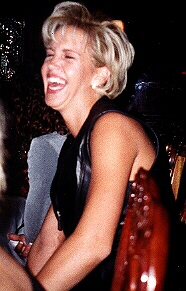
Rewind
On April 19th, 1996 at 9:55 a.m. I was arising from my desk in our spare bedroom in Las Vegas, about to head for the Y for some hoops, when the phone rang. Six hours later, after one long continuous moving violation across the Mojave Desert, ours would become a world of imaging and IV's, visitors' passes and parking validation, catheters, CAT-scans, and cafeterias, protocols and p-values, ambiguity and anguish. Most of you have shared much of that intense journey with us. We will always be grateful to all of you. You have comforted and sustained us beyond measure.
May the memory of our courageous and compassionate Sissy continue to sustain us all.
There is so much to recount. Bear with me as I try to fill in the blanks that explicate the journey from Christmas of 1997 to July 1st of 1998-- and beyond.
The soggy El Nino Winter of our Discontent; the five weeks of daily lung radiation; the seizure of April 4th that would mark the beginning of the end; the final re-admit to Brotman on April 29th; the Gamma Knife radiosurgery at Good Samaritan; last-ditch chemo; the 30th birthday party that broke all hospital rules...
6:40 p.m., Wednesday, July 1st.
This will take me a while, in light of the persistently recurrent interruption of tears; but the story continues...
___
Yes, the story must continue. With all deliberate dispatch. Stay tuned.


